
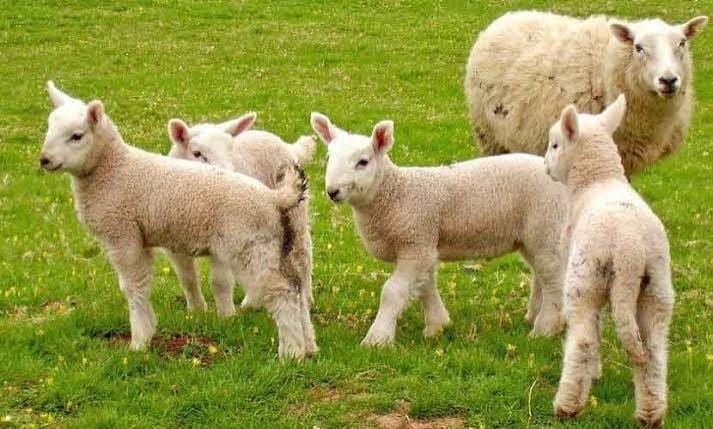
Dreaming about a lamb is generally interpreted as a sign of a good child, family happiness, sustenance, good news, and the beginning of a peaceful period. Seeing a healthy, white, and calm lamb may indicate a joyful development within the family, positive news about something you have been waiting for, or receiving the rewards of your efforts.
Because a lamb is a young animal that has not yet reached maturity, one of the important meanings of this dream concerns something new that has the potential to grow over time. It may represent a new job, relationship, child, modest but promising source of income, or a plan that is still in its early stages.
In classical dream interpretation, the lamb is particularly associated with children and family life. Therefore, the lamb’s condition, behavior, and the dreamer’s interaction with it are important when determining the meaning of the dream.
General Interpretation of Dreaming About a Lamb
Seeing a healthy and beautiful lamb may indicate joyful developments within the home or family. If you have been waiting for news, the dream may point toward a favorable outcome, greater harmony at home, or a small but promising financial opportunity.
Seeing several lambs expands this meaning. A flock of lambs may indicate increasing abundance within the household, a growing family or social circle, and several small opportunities arriving one after another.
A sick, injured, or lost lamb carries a different message. It may draw attention to someone who needs protection or to a responsibility that has been neglected.
Therefore, the most important detail is not simply seeing a lamb, but the condition of the lamb in the dream.
According to Ibn Sirin
In classical interpretations attributed to Ibn Sirin, lambs and young sheep are especially connected with children, offspring, and family life.
Seeing a healthy lamb may represent a good-natured child who is devoted to their family. For married people, it may indicate positive developments involving children or joyful news within the household.
For an unmarried person, however, a lamb does not necessarily predict having a child. It may instead represent a new responsibility, a relationship that needs care, or a promising project with the potential to grow.
Bringing a lamb into the home can be interpreted as joy or sustenance entering the household, while feeding a lamb indicates investing time and effort in something that will gradually develop.
According to Al-Nabulsi
Within Al-Nabulsi’s classical approach, sheep and their young are associated with wealth, children, livelihood, and domestic life.
A calm and healthy lamb is considered favorable. It may indicate happiness received through family members, harmony within the home, or the well-being of someone under the dreamer’s care.
Seeing many lambs may indicate an expansion of livelihood and an increase in blessings.
A lamb that runs away or becomes lost may suggest that an existing opportunity needs to be protected, while a sick lamb can point toward a family or personal matter requiring greater attention.
Sufi Perspective on Dreaming About a Lamb
From a Sufi perspective, the lamb can be interpreted through gentleness, submission, compassion, and the gradual overcoming of the ego’s harsher qualities.
Choosing patience and mercy instead of anger, arrogance, and excessive ambition is an important part of spiritual maturity. Encountering a peaceful lamb in a dream may therefore suggest that conflicts should be approached with greater calm and compassion.
Protecting or feeding a lamb can also represent taking responsibility for others rather than living only for oneself. The emphasis here is not on displaying power but on using one’s strength to protect and benefit others.
Psychological Interpretation
Psychologically, dreaming about a lamb can be closely connected with the need to protect or be protected.
There may be someone in the dreamer’s life who needs care or emotional support. This could be a child, relative, close friend, or another person who depends on the dreamer.
On the other hand, the lamb may represent the dreamer. Someone experiencing a stressful or highly competitive period may unconsciously desire a safer, quieter, and more supportive environment.
The emotions experienced around the lamb are particularly important. Feeling peaceful may reflect a desire for security and closeness, whereas worrying that something might happen to the lamb can indicate fear of loss or failure to protect someone important.
According to Freud
In Freud’s approach to dreams, the meaning of a symbol depends heavily on the dreamer’s personal experiences and associations. Therefore, it would be misleading to claim that a lamb has one fixed psychological meaning for everyone.
Nevertheless, a lamb may evoke childhood, parental protection, receiving care, or caring for another person.
Holding or feeding a lamb may express a desire for affection and emotional closeness. A lost or injured lamb may instead be connected with anxiety about losing someone or something the dreamer values.
According to Carl Gustav Jung
From Carl Gustav Jung’s perspective, animals appearing in dreams can connect the dreamer with instinctive and unconscious aspects of the psyche. Rather than assigning Jung a specific fixed interpretation of the lamb, it is more appropriate to understand the image through his broader approach to animal symbolism.
A lamb may represent a part of the personality that is still developing and therefore requires protection.
The dreamer may have discovered a new direction in life but has not yet fully developed it. A new talent, idea, relationship, or way of living can initially be as vulnerable as a young lamb and require time and attention to mature.
The lamb can therefore represent undeveloped potential that needs to be nurtured.
Neurological and Cognitive Explanation
Dreaming about a lamb is not, by itself, an indication of a health problem.
During sleep, the brain can combine recently seen images with childhood memories, emotional experiences, and previous encounters with animals. These elements can appear in unusual combinations, particularly during REM sleep.
Young animals such as lambs naturally evoke associations with care, vulnerability, and affection, and these emotional connections can become part of the dream narrative.
Recently seeing a lamb, visiting a farm, watching animal-related content, or thinking intensely about children or family responsibilities may therefore contribute to this type of dream.
Spiritual Interpretation
Spiritually, a lamb may be associated with peace, compassion, new beginnings, and protection.
The dreamer may be entering a calmer stage after a long period of struggle. A healthy white lamb, in particular, may indicate relief and tranquility after difficult circumstances.
A newborn lamb points toward something that has only recently begun. The opportunity may appear small at first, but with proper care it could eventually produce important results.
Different Scenarios of Dreaming About a Lamb
- Dreaming of a white lamb: Good intentions, family harmony, and joyful news.
- Dreaming of a black lamb: Someone who stands apart from others or an unexpected development within the family or social circle.
- Dreaming of a flock of lambs: Abundance, a growing family, and several opportunities arriving close together.
- Dreaming of a young lamb: A new project, responsibility, or positive family development.
- Petting a lamb: Stronger emotional bonds and peace.
- Holding a lamb in your arms: Protecting someone or accepting an important responsibility.
- Feeding a lamb: Helping a person, relationship, or project grow through consistent effort.
- A lamb following you: Someone may trust you or depend on your support.
- A lamb running away: A reminder to protect a small but valuable opportunity.
- Seeing a lost lamb: A neglected responsibility or someone who needs care.
- Seeing a sick lamb: A family or personal matter requiring greater attention.
- Seeing a dead lamb: The end of an expectation or a plan that did not develop as hoped.
- What is the meaning of baby lamb?: New beginnings, good news, and an opportunity that can grow over time.
- Seeing a lamb inside your home: Joyful developments involving the household or family.
- Seeing a sheep with its lamb: The parent-child bond, family support, and a strong sense of protection.
Conclusion
Dreaming about a lamb is primarily connected with children, family, livelihood, care, and positive developments in classical interpretations. A healthy and peaceful lamb can indicate harmony within the family, good news, or a promising opportunity that will grow over time. Feeding or protecting a lamb points toward nurturing a new responsibility, while a sick, lost, or injured lamb draws attention to a person, relationship, or matter that should not be neglected.
Psychologically, the dream centers on protection, security, affection, and vulnerability. From a Jungian perspective, the lamb may also represent a developing aspect of the personality that can become stronger when given sufficient care. For this reason, the meaning of the dream depends not only on the lamb’s appearance but also on whether the dreamer protects it, feeds it, loses it, or simply observes it from a distance.